
Step 5 · Follow-through
What is funding?
Funding means connecting what you own to the plan you signed. Depending on the asset, that may mean a new deed, a change to an account’s owner, or an updated beneficiary.
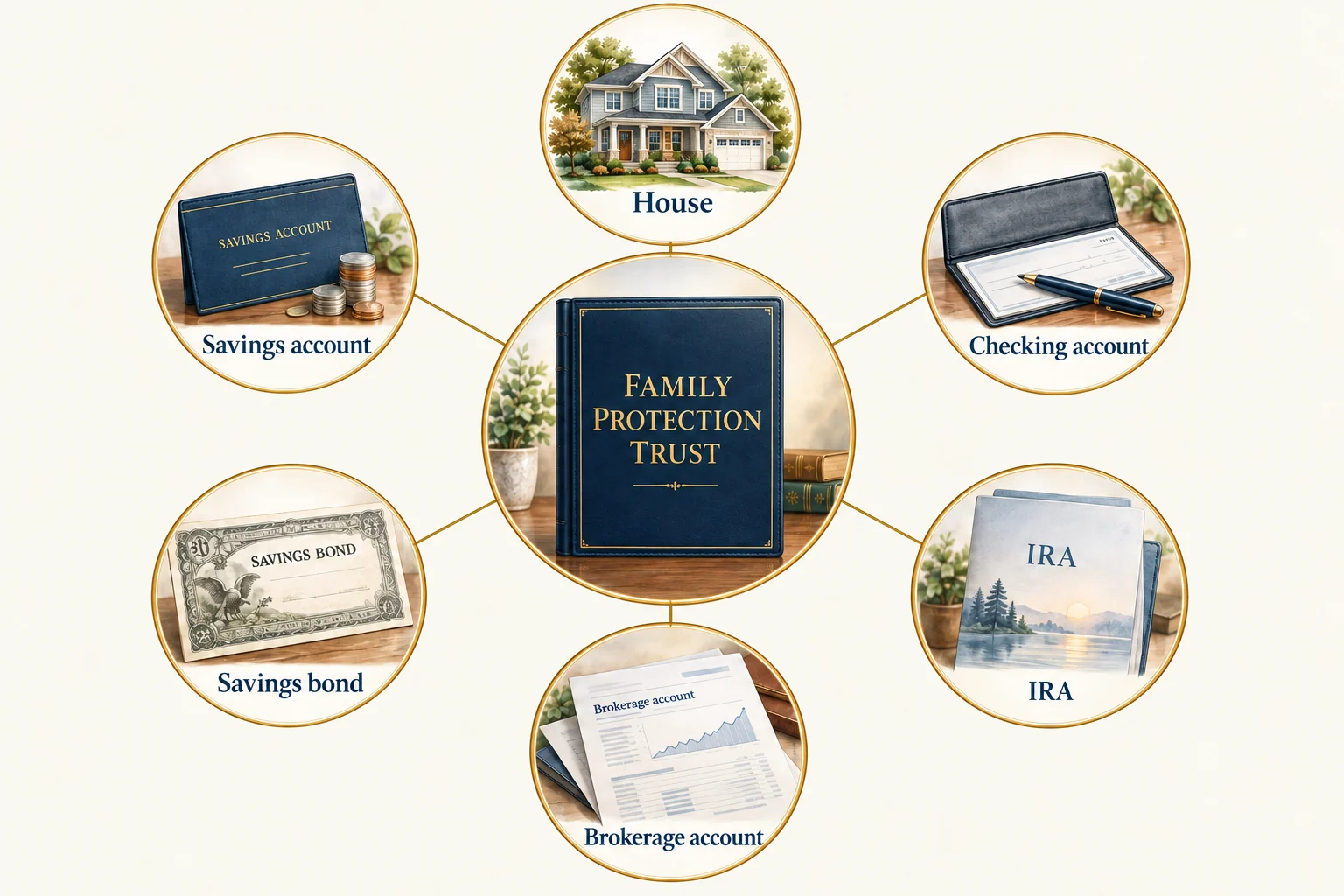
Your plan gives the instructions. Funding connects the property.
Think of the trust as a set of instructions for the person who manages property for your family. We need the right property connected to those instructions so they can do the job you intended.
Writing your house or account on a list does not, by itself, change who owns it or who receives it. We work through each asset with you and identify the change it needs.
Different assets. Different steps.
| What you own | What the work may involve | What affects the timing |
|---|---|---|
| Your home or other real estate | We review ownership, prepare the appropriate deed, arrange signing, and submit it for recording. | A straightforward deed is often one of the quicker steps. County recording, title issues, or property in another state can add time. |
| Bank and taxable investment accounts | We coordinate the appropriate ownership change or other arrangement with you and the institution. | The bank or investment company sets its forms and review process. Acceptance may take days or weeks, and sometimes longer if it requests more information. |
| Retirement accounts and life insurance | We review who should receive the benefits and help coordinate the appropriate beneficiary forms. | Timing depends on the plan administrator or insurer. Some changes are processed online; others need signed forms and additional review. |
| A business interest | We review the ownership documents, required permissions, and the transfer the plan calls for. | Company agreements, co-owner consent, and lender requirements can add steps. |
We choose the approach asset by asset. Retirement accounts need special beneficiary and tax review; do not change ownership or name the trust automatically.
Here’s how we work through it.
- Make the list together.
After our first conversation, we ask you to update your property, account, and business information. Include current owners and beneficiaries, and provide the statements and records needed to review the list.
- Decide what each asset needs.
During planning, we identify the steps each asset needs and who will prepare, sign, and submit the paperwork. With your permission, we coordinate with your financial advisor and other professionals.
- Send the right paperwork.
Once the necessary signed documents and, where applicable, a certificate of trust are available, we provide asset-specific instructions and prepare or coordinate paperwork within your engagement. You complete any owner signatures or institution steps that must come from you.
- Confirm the change.
We ask for the recorded deed or the institution’s confirmation and review the evidence with the funding record. A submitted request or a reported change stays pending until completion is verified.
How long does it take?
We can move quickly on the work within our control. Straightforward deeds can be prepared and submitted promptly once the information and signatures are ready. The recorder still controls its processing time.
Account ownership and beneficiary changes may take longer because each institution has its own rules, forms, and review queue. We will tell you what is submitted, what is waiting, and whether we need anything from you. Funding and ownership changes follow their own timelines, separate from document preparation and signing. We estimate timing for your particular assets rather than promise same-day completion.
How will I know it is finished?
We look for the recorded deed or the institution’s confirmation that it accepted the change. We keep that confirmation with your funding record and track anything still outstanding.
What about a new account or property I buy later?
Tell us when you buy property, open an account, or change a beneficiary. We help you decide how it fits the plan; the earlier work does not automatically cover a newly opened account.
Read more about trusts and beneficiaries
We keep track of what comes next.
Bring us the question, the statement, or the letter from the bank. We’ll help you find the next step.
Ask us about funding ↗Back to the playbook ↗